Latest Releases
Find our latest releases below. After searching, you can view the most recent releases by clearing the search.
Browse experts on:
- Politics 2026
- Artificial intelligence
- Middle East conflict
- Supreme Court rulings
- Ukraine/Russia conflict
- U.S. abortion policy
View Latest Releases
Kingfisher feathers’ colors created from nanostructures, not pigments
February 14, 2026
Scientists investigated cultural objects decorated with kingfishers' vibrant blue feathers to reveal the nanoscale architecture that gives rise to their colors
Why colorectal cancer is rising in younger adults (James Van Der Beek's death)
February 12, 2026
James Van Der Beek was a champion for early screening, yet his tragic death underscores a troubling trend: Colorectal cancer deaths have been rising among Americans under 50 and it is the leading cause of cancer death in this age group.
* Media Advisory
* Media Advisory

Sleep‑aligned fasting improves heart and blood‑sugar markers
February 11, 2026
A new Northwestern Medicine study has personalized overnight fasting by aligning it with individuals’ circadian sleep-wake rhythm — an important regulator of cardiovascular and metabolic function — without changing their caloric intake.
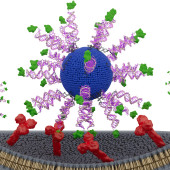
HPV cancer vaccine slows tumor growth, extends survival in preclinical model
February 11, 2026
Scientists designed vaccines to treat HPV-positive head and neck cancer. All vaccines had the same ingredients but different, strategically designed structures. One vaccine vastly outperformed the others, showing that vaccine design depends on structure as well as medicinal components.
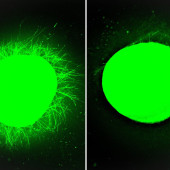
Paralysis treatment heals lab-grown human spinal cord organoids
February 11, 2026
Scientists developed most advanced, functional human spinal cord organoid yet. Team induced lacerations and contusions to simulate spinal cord injuries and then applied “dancing molecules."

What chatbots can teach humans about empathy
February 11, 2026
Over half of U.S. adults are using large language models (LLMs) — such as ChatGPT, Gemini and Copilot — in some capacity. Whether using artificial intelligence to create grocery lists, turn oneself into a Muppets character or divulge one’s deepest, darkest secrets, humans are relying more on AI models in their everyday lives, possibly because AI chatbots have been shown to generate responses that make people feel validated, seen and heard.
* Media Advisory
* Media Advisory

Winter opera at Northwestern offers two rare operatic experiences
February 10, 2026
Northwestern University Opera Theater stages George Bizet’s “Carmen,” a work seldom mounted at the university level due to its exceptional vocal and dramatic demands. The production presented by the Henry and Leigh Bienen School of Music has just 4 performances at Cahn Auditorium Feb. 26 through March 1.
Ryan Family Research Acceleration Fund fuels pioneering life science discoveries
February 10, 2026
Northwestern University recently awarded more than $2 million to eight innovative projects through the Pat & Shirley Ryan Family Research Acceleration Fund, which provides strategic seed funding to move bold ideas from proof of concept toward real-world impact.

U.S. South Asians face elevated heart risk at age 45 despite reporting healthier habits
February 10, 2026
South Asian adults in the U.S. report doing many of the right things for heart health, yet they show significantly higher rates of prediabetes, diabetes and hypertension than white and Chinese adults, and higher than or roughly similar rates to Black and Hispanic patients, according to a new study led by Northwestern Medicine.
Common anti-seizure drug prevents Alzheimer’s plaques from forming
February 8, 2026
Northwestern University scientists have pinpointed when and where toxic proteins accumulate within the brains of Alzheimer’s patients — and discovered a decades-old Food and Drug Administration (FDA)-approved drug that can stop the accumulation process before it even begins.