Northwestern celebrates 22 years as a top Fulbright producer
February 4, 2026
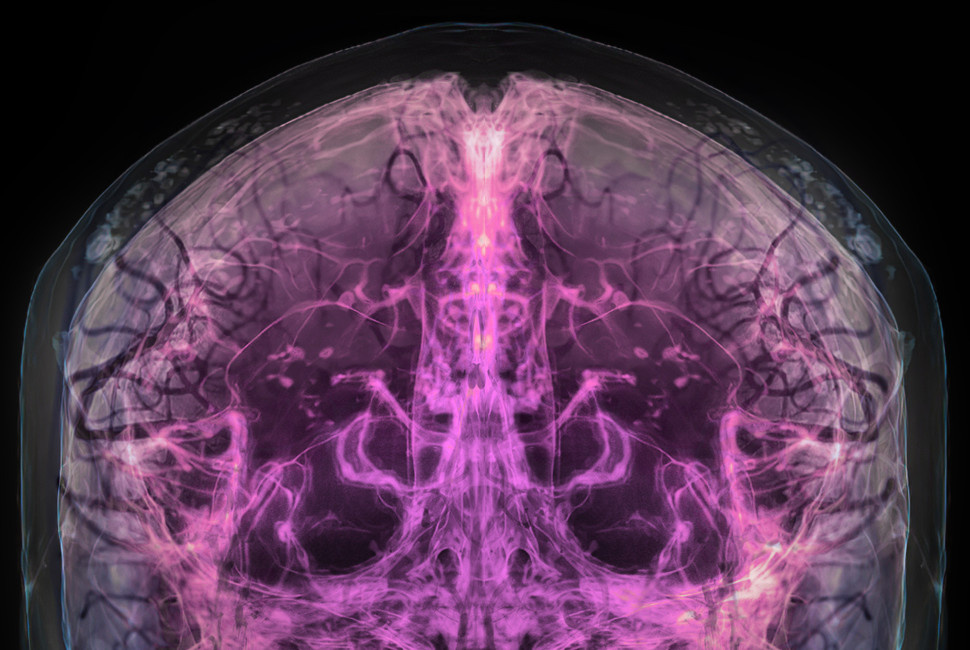
Northwestern University has launched the Simpson Querrey Brain Health Institute (SQ-Brain), made possible by nearly $25 million in philanthropic funding from University Trustee Kimberly K. Querrey (’22, ’23 P).
SQ-Brain envisions a future where our brains last as long as our bodies — a world where brain health is continuously measurable, modifiable and monitorable across the lifespan, and where prevention of cognitive decline and brain injury is anchored in neurovascular biology and precision medicine.
“Research at higher education institutions has always served to improve the human condition,” said Interim President and President Emeritus Henry S. Bienen ’09 H (’19, ’25, ’28 GP). “Kimberly Querrey’s vision for the biomedical sciences at Northwestern has transformed our efforts and impact. We are deeply grateful for her generosity, which ensures that Northwestern remains at the leading edge of discovery and treatment.”
The new institute brings together physicians, scientists and engineers at the intersection of their scientific fields to facilitate cross-boundary discoveries that address fundamental questions hindering brain health research. By integrating research that generates actionable discoveries with clinical care that translates evidence into earlier detection and community partnerships that expand prevention, SQ-Brain seeks to preserve brain health across the lifespan.
“Kimberly’s wonderful gift to establish SQ-Brain ensures that Northwestern’s urgent work to advance our understanding of brain health and improve the lives of patients can move forward rapidly,” said Eric G. Neilson, M.D., vice president for medical affairs and Lewis Landsberg Dean, Northwestern University Feinberg School of Medicine. “Her inspiring commitment will have an important and lasting impact on human health.”
According to the World Health Organization, by 2030, brain-related disorders will drive half of the global economic burden of disability. To address this urgent and growing brain health burden, the institute will build on recent advances in neurovascular science. The 2024 Lancet Commission estimates that approximately 45% of dementia risk is linked to 14 modifiable factors — many vascular and preventable, and supported by clinical trial evidence that tighter blood pressure control reduces cognitive impairment risk. The institute will further accelerate progress in Alzheimer’s disease, where earlier detection is now possible but requires monitoring for vascular complications. Finally, it will evaluate the brain-health implications of rapidly expanding GLP-1 use.
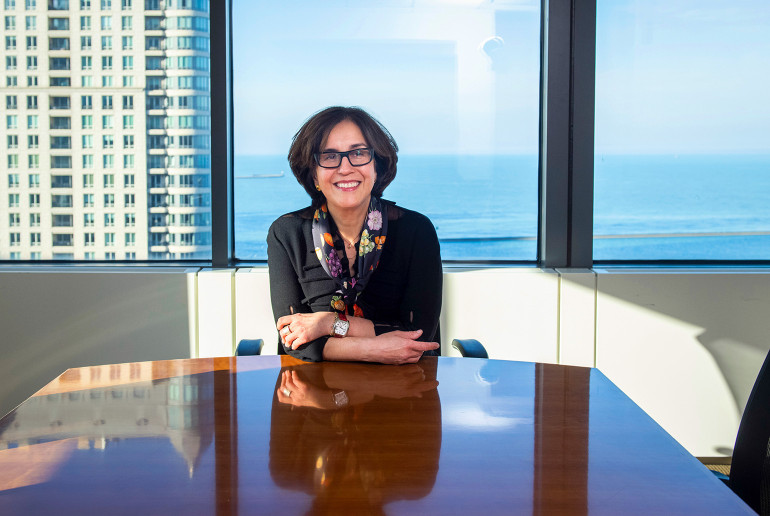
Farzaneh Sorond, M.D., Ph.D., vice dean for faculty affairs at Feinberg and the Dean Richard H. Young and Ellen Stearns Young Professor of Neurology in the Ken and Ruth Davee Department of Neurology, will lead the institute as the founding director of SQ-Brain. As a physician-scientist with training in vascular neurology and neurocritical care, Sorond focuses her clinical practice at Northwestern Medical Group and her research at Feinberg School of Medicine on advancing a brain-health agenda across the lifespan.
“Preserving brain health across the lifespan may be one of the defining health priorities of the 21st century,” Sorond said. “Lifespans are rising — brain health must keep pace. We are incredibly grateful for Kimberly’s visionary generosity and the opportunity she has provided to advance meaningful discoveries that will preserve brain health across the lifespan and address a critical unmet need. Her support will have a generational impact and help us accelerate the foundational work that we have already started in the Simpson Querrey Center for Neurovascular Sciences to ‘Identify Mechanisms to Preserve Agility in Cognition and Thinking’ (IMPACT Study).”
The institute builds on Northwestern’s unique strengths in neurological science, previously established by Querrey, including the Simpson Querrey Center for Neurovascular Sciences (SQ-CNS) and the Simpson Querrey Lung Institute for Translational Science (SQ-Lifts), both founded in 2022, and the Querrey Simpson Institute for Bioelectronics (QSIB).
“SQ-Brain will achieve its vision through a convergence of scientific thought, fostering collisions of perspectives, questioning entrenched assumptions and embracing experimentation at the boundaries of disciplines, to address the unmet need of our lifetime: to ensure our brains last as long as our bodies,” Sorond said.
Querrey’s support for SQ-Brain builds on her distinguished legacy of advancing Northwestern’s academic priorities.
“The Simpson Querrey Brain Health Institute represents the kind of bold, interdisciplinary effort that is needed to address one of the greatest challenges in medicine: preserving brain health across the lifespan,” Querrey said. “Led by Dr. Farzaneh Sorond, M.D., Ph.D., SQ-Brain will bring together exceptional talent in research, clinical care and engineering to redefine what is possible in brain health. Dr. Sorond’s leadership and vision — focused on translating scientific discovery into meaningful advances for patients — will be central to the institute’s mission.
“This is an investment in longer, healthier lives — and in a future where more people can age with their independence and dignity intact. It is inspiring to help accelerate that progress.”
Querrey’s gifts in support of research and innovation at Northwestern include the Louis A. Simpson and Kimberly K. Querrey Biomedical Research Center, Kimberly K. Querrey and Louis A. Simpson Institute for Bioelectronics, Querrey InQbation Lab, Querrey Simpson Institute for Regenerative Engineering at Northwestern University, Simpson Querrey Institute for Epigenetics, Simpson Querrey Lung Institute for Translational Science, Simpson Querrey Center for Neurogenetics, Mesulam Institute for Cognitive Neurology and Alzheimer’s Disease, and the new Querrey-Simpson Institute for Translational Engineering for Advanced Medical Systems (QSI-TEAMS), as well as several endowed professorships and research centers across STEM and business disciplines, including the Kimberly Querrey Professorship of Astrophysics.
Querrey’s leadership in research is exercised through her membership and past chairship of the Research, Innovation and Entrepreneurship Committee of the University’s Board of Trustees, where she also serves as the current chair of the Governance and Nominations Committee and member of the Executive Committee.