Northwestern invests in the future of discovery
October 13, 2026

Whether Northwestern students major in chemistry, journalism or music composition, they have a variety of ways to broaden their educational horizons, build their resumes and expand their skill sets.
Two University offices that help shape learning outside the classroom — the Office of Undergraduate Research (OUR) and the Global Learning Office (GLO) — are rolling out changes that affect how students can do research, study abroad and gain hands-on experience.
“Learning starts in the classroom but does not end there,” said Karen Smilowitz, associate provost for undergraduate education. “As students’ interest in experiential learning grows, we are adapting to serve those needs and position our students for even greater success after graduation.”
Here’s a look at some of the new initiatives formed with input from students, faculty and staff.
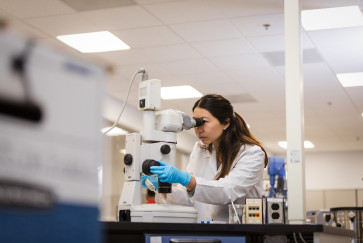
A new OUR initiative called Ignite provides funding for students interested in pursuing summer 2027 research projects in their fields of interest.
Launched as part of a sweeping set of initiatives announced earlier this month by the Office for Research, the pilot program targets students who are new to research and may not be ready for their own project but instead can apply to assist on a project led by a faculty member.
“Undergraduate research isn’t a series of tasks, it’s a state of mind. It’s learning how to think, collaborate and solve a problem that hasn’t been solved before,” said Peter Civetta, director of OUR. “In that way, it becomes a complement to work done in the classroom. And while we know how impactful research can be, we also know many students could use a hand in getting started.”
OUR supports students across Northwestern schools and disciplines through advising, workshops and funding for research and creative projects. The Ignite program complements the Undergraduate Research Grant program (URG), which is available for academic year and summer work. Students can do this kind of work more than once, as they can submit an Advanced URG application to continue a project or start a new one.
This addition to the research pipeline underscores Northwestern’s commitment to the important intersections between receiving knowledge and participating in the creation of new knowledge. Detailed information about the new Ignite program will be coming in the next few weeks.
Prior to the COVID-19 pandemic, 600 to 700 undergraduates traveled abroad each year, according to GLO, which offers credit-bearing study abroad, exchange, research and academic internships. Last year, more than 1,000 studied in 50 different countries. In light of this growth, Northwestern is implementing changes to program offerings, application processes and tuition models to ensure a consistently strong academic experience for all students.
“Study abroad can be a fantastic part of an undergraduate student’s academic journey,” said Sara Tully, director of GLO. “As the demand has grown, it is important that the University adapts and ensures that our students are pursuing opportunities that integrate with their courses of study.”
Over the past year, GLO has worked with stakeholders across the University in a series of discussions that have reaffirmed priorities for study abroad:
Like its peer institutions, Northwestern will adopt a home school tuition model, in which undergraduates participating in University-approved study abroad pay Northwestern tuition during the academic year. While abroad, students remain enrolled at Northwestern and continue to receive all related support services. Tuition changes begin in summer 2027.
For students, the home school tuition model:
Tuition models for summer vary depending on the type of program. Northwestern programs will follow a version of home school tuition, and all above aspects are applicable. Partner programs will be billed directly by the partner, and financial support will be available through a new scholarship program rather than financial aid.
It’s recommended that students begin study abroad preparation early in their academic careers at Northwestern. Study Abroad 101 info sessions are ongoing throughout November and beyond. In addition, the Study Abroad Fair is at noon on Thursday, Nov. 12, at Norris University Center. Students can meet with GLO staff, study abroad returnees and representatives from partner and campus programs to ask questions about study abroad opportunities, learn about the new application process and gather resources to help navigate the process.
Interested students should visit the GLO website to determine which program best matches their academic goals and register for courses in language, global studies and international affairs to strengthen their academic preparation.
GLO also manages school-based programs including the Global Engagement Studies Institute (GESI), a credit-bearing summer internship, the School of Education and Social Policy global practicum and the Medill Junior Residency Abroad.