Dark matter detector picks up a mysterious signal
September 1, 2026
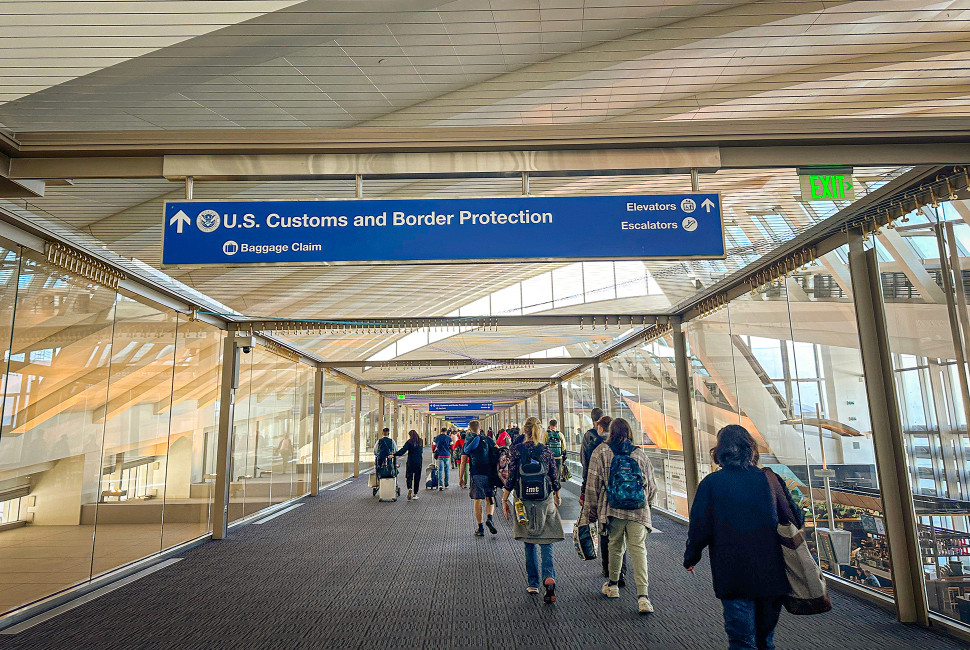
A new Northwestern University study explores how Republicans and Democrats who help shape their party’s platforms understand and think about immigration status at a time of increasingly punitive immigration politics.
Through interviews with political activists in Southern California, the study showed stark differences in how migrants are viewed: either “like us” and deserving of rights, or as lawbreakers undeserving of social belonging and benefits.
The study’s author is Jesse Yeh, a political sociologist and assistant professor of instruction in legal studies at Northwestern’s Weinberg College of Arts and Sciences. Yeh conducted interviews between 2020 and 2021 with a multiracial group of 65 Democratic and Republican activists in Southern California’s Orange and San Bernardino counties, a rich context for studying party activist attitudes toward migrant lawbreaking. A liberal state, California is also the birthplace of the New Right and passed the anti-migrant legislation Proposition 187 in 1994.
The study, published in Cambridge University Press Law and Society Review, found Republicans and Democrats have polarized views of undocumented migration but agree on preferred policy outcomes to address the issue.
Northwestern Now recently spoke with Yeh about the intersection of immigration and party politics, immigration policy and what lawmakers should take away from the study.
When did immigration restriction become a politically polarizing topic?
Consensus over addressing immigration issues was largely bipartisan in the 1980s. Polarization started in the early 2000s when some states passed measures restricting immigrant rights.
Violating immigration law is a civil — not criminal — offense. Previously, the lack of due process for immigrants was justified on the grounds that detention and deportation were not conceived to be punishment. Both have become increasingly punitive, which raises new questions about what the extent of rights for immigrants should be.
How does each political party view the role of migrants in the labor force?
The people I interviewed were not concerned with immigrants taking their jobs. What they did think about was whether immigrants deserve to have a job and benefits. Most spoke about prioritizing care for their own citizens before allowing immigrants to partake in public benefits.
Why are some groups denied asylum and others expedited for citizenship?
Across party lines, I found a tremendous consensus in the way people think about undocumented immigrants. Rather than considering if an individual broke the law, they thought about a person’s imagined place in society and the economy. Those beliefs about the belonging of immigrants are often shaped by perceptions about socioeconomic status, race and ethnicity.
How do members of each party view deportation?
My interview findings were consistent with recent polling. More Democrats lean toward amnesty for all immigrants, and more Republicans support zero tolerance and deportation. But what is most interesting is there is tremendous consensus among most people of both parties in wanting a pathway to citizenship for some people.
For example, one Republican respondent, John, a Southeast Asian businessman in his mid-40s, said legality was very important to him, but regarding policy he said, “We need to get them becoming citizens…And if they’re here illegally causing crime, they need to be gone.”
Likewise, a Democratic respondent, Danielle, a white retired attorney in her late 60s, said legality was not important to her because of the desperation that leads people to come here, but her preferred policy was similar to John’s. “There should be a path to citizenship for people who are here for whatever reason, and are good people, who are working and who are not breaking the law.”
What do people frequently misunderstand about immigration law?
A big concern people have is not wanting to accept people as citizens who have committed a crime. But what makes someone a criminal is a capacious category. Are speeding or parking tickets criminal? What feels illegal to some people may not actually be breaking the law. Many people feel those who are affiliated with people thought to be gang-related are criminal, even if they have no record. This begs the question of what it means to not want people who are criminals to have citizenship.
It’s also important to know the distinctions of legal and illegal are arbitrarily created. “Legality” is often used as shorthand without defining what we mean when we use those categories. As the recent Temporary Protected Status Supreme Court case shows, the very same person can go from “legal” to “illegal” depending on the changes in the administration.
What should lawmakers take from this study?
One insight for lawmakers is to consider how we define the boundaries of eligibility to become American.
Across party lines, people are supportive of young people brought here as children and eligible for DACA. Since many voters think upstanding young people have a lot to contribute to society, they believe it should be immaterial if they broke the law if they entered the U.S. as minors with adults.
When people talk about a pathway to citizenship, they often mean there should be amnesty for some members of the immigrant population. But the legal channel to come is tremendously narrow if someone doesn’t have a U.S. relative or can’t land a job before coming here.
Lawmakers can consider new ways to draw these boundaries, so they are less arbitrary, and so more immigrants who are poised to make positive contributions to society will have a legal path to citizenship.